Choosing among the 10 Best WPC Flooring Options for Global Buyers requires more than comparing colors and prices. Wpc Flooring combines wood-fiber content with polymer materials, creating a practical surface for homes, offices, hospitality spaces, and retail interiors. Its waterproof performance, dimensional stability, and easy maintenance make it attractive across different climates. However, product quality can vary sharply between suppliers.
A reliable evaluation begins with real specifications. Check plank thickness, wear-layer depth, locking-system design, surface texture, and formaldehyde emissions. Request laboratory reports, installation instructions, and recent product samples. A dense core may feel more stable underfoot, while a stronger wear layer can resist chair movement, sand, and frequent cleaning. In humid coastal regions, test moisture resistance carefully. In colder markets, examine expansion behavior before placing a large order.
Samples matter.
Color images often hide texture and joint visibility. I have found that a floor looking warm online may appear gray beneath warehouse lighting. This is easy to overlook. Buyers should also confirm carton dimensions, pallet protection, replacement policies, and available certifications for their destination market. No option is perfect. A rigid, premium plank may cost more to transport, while a cheaper product may show surface wear sooner. The best choice depends on traffic, climate, installation skill, budget, and long-term service expectations. This guide compares ten promising Wpc Flooring options through those practical criteria, while recognizing that supplier verification and on-site testing still deserve the final decision.
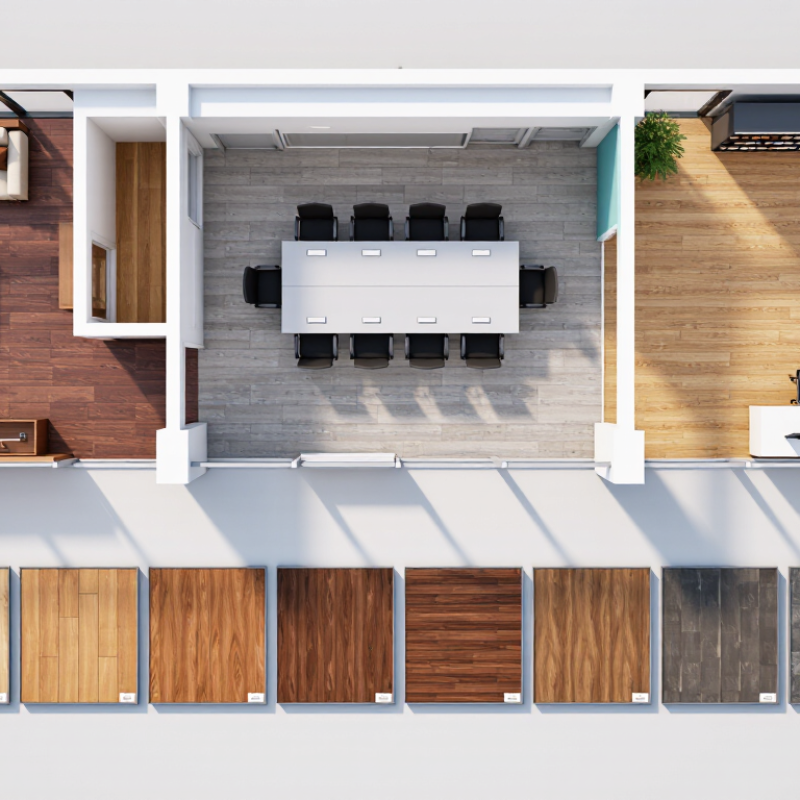
WPC flooring means wood plastic composite flooring. Its rigid core combines wood flour, polymers, and stabilizers. A printed design layer adds visual texture, while the wear layer resists scuffs and daily traffic. The construction feels warmer and quieter than many stone-based rigid floors. It also offers strong dimensional stability. Check the core.
Global buyers choose WPC flooring for apartments, hotels, offices, and retail interiors. It handles spills better than traditional wood, but installation still matters. Uneven subfloors can create movement, gaps, or clicking sounds. According to Grand View Research, the global luxury vinyl flooring market reached about USD 24.7 billion in 2023. It may grow at roughly 7.7% annually through 2030. WPC is one segment of this wider category, so the figure should not be treated as WPC-only demand. ASTM F3261 also provides a useful reference for evaluating vinyl flooring with WPC cores.
Tips: Request test reports for wear resistance, slip performance, dimensional stability, and emissions. Confirm the product’s expansion requirements before ordering. In humid regions, inspect carton sealing and warehouse conditions carefully. “Waterproof” does not mean installation-proof. Small details matter.
Buyers should compare core density, surface coating, locking accuracy, and warranty terms. Thicker flooring is not automatically better. A dense, well-balanced structure can outperform a thicker but weaker panel. Some product claims sound perfect; real projects rarely are. Ask for samples, installation instructions, and independent laboratory results before selecting among the ten options.
When evaluating the best WPC flooring options, start with the project environment, not the appearance. Measure moisture levels in the subfloor and identify areas exposed to sunlight, spills, or heavy traffic. A kitchen, hotel corridor, and bedroom need different performance priorities. Check the wear layer, core density, surface texture, and locking system. Thicker products are not always better. Poor installation can still cause movement, gaps, or squeaking.
Ask suppliers for clear technical documents and recent test reports. Look for dimensional stability, slip resistance, fire performance, and formaldehyde emissions tested under recognized standards. Confirm whether the results apply to the exact product, thickness, and surface finish. Sample several boards before ordering. Place them near a window and under furniture for a few days. Color variation may appear later, and online images can be misleading.
Installation details matter. The subfloor should be clean, flat, dry, and properly prepared. Leave the expansion gap required by the manufacturer, especially in rooms with temperature changes. Inspect the locking edges closely; weak connections often fail before the surface wears out. A lower quotation may seem efficient, but replacement costs can erase the saving. I would also question unusually perfect claims. Real products have limits, and reliable suppliers explain them clearly. Check warranty terms, cleaning requirements, batch consistency, and local building regulations before making a purchase.
| Option | Recommended Application | Typical WPC Construction | Total Thickness | Wear Layer | Common Format | Installation | Key Evaluation Factors | Overall Suitability |
|---|---|---|---|---|---|---|---|---|
| 1. Standard Residential WPC Plank | Bedrooms, living rooms, dining areas and hallways | Wood-plastic composite core, decorative film and transparent protective wear layer | 5–7 mm | 12–20 mil | Approximately 180–230 mm wide and 1,220–1,520 mm long | Floating click-lock system | Good balance of comfort, dimensional stability, appearance and cost; verify locking strength and subfloor requirements | Excellent for general homes |
| 2. Enhanced-Comfort WPC Plank | Homes where underfoot comfort and sound reduction are priorities | WPC core with an attached foam or acoustic backing layer | 6–8 mm including backing | 12–20 mil | Approximately 180–230 mm wide and 1,220–1,520 mm long | Floating click-lock system | Check backing density, compression resistance and whether additional underlayment is permitted or required | Very good for apartments and family homes |
| 3. High-Traffic Residential WPC Plank | Entryways, kitchens, corridors and homes with pets | Higher-density WPC core with a thicker protective coating | 6–8 mm | 20–30 mil | Approximately 180–230 mm wide and 1,220–1,520 mm long | Floating click-lock system | Prioritize abrasion resistance, stain resistance, surface texture and a clear residential wear warranty | Excellent for demanding residential use |
| 4. Extra-Wide WPC Plank | Open-plan interiors and large rooms requiring fewer visual joints | Rigid WPC core with a wood-look decorative layer | 5–8 mm | 12–20 mil | Approximately 230–305 mm wide and 1,520–1,830 mm long | Floating click-lock system | Confirm plank flatness, locking tolerance and acclimation guidance because wider planks can be more sensitive to subfloor irregularities | Very good for spacious interiors |
| 5. Long-Format WPC Plank | Contemporary residential and light commercial spaces | Rigid composite core with extended plank proportions | 6–8 mm | 20–30 mil | Approximately 180–230 mm wide and 1,830–2,286 mm long | Floating click-lock system | Evaluate transport packaging, end-joint stability, installation waste and the supplier’s maximum room-size guidance | Very good for modern visual designs |
| 6. Embossed-in-Register WPC Plank | Projects requiring a more realistic wood appearance | WPC core with synchronized surface embossing and printed wood grain | 5–8 mm | 12–20 mil | Approximately 180–230 mm wide and 1,220–1,520 mm long | Floating click-lock system | Inspect grain alignment, visual repeat rate, bevel quality and surface slip performance; appearance should be checked under different lighting | Excellent for design-focused interiors |
| 7. Low-Gloss Textured WPC Plank | Scandinavian, rustic and low-maintenance interior styles | WPC core with matte coating and a textured decorative surface | 5–7 mm | 12–20 mil | Approximately 180–230 mm wide and 1,220–1,520 mm long | Floating click-lock system | Compare cleanability, texture depth, scratch visibility and color consistency between production batches | Very good for everyday residential use |
| 8. Water-Resistant WPC Kitchen Plank | Kitchens, utility rooms and other areas exposed to occasional surface spills | Closed-cell or low-absorption WPC core with sealed surface and joints | 5–8 mm | 20–30 mil | Approximately 180–230 mm wide and 1,220–1,520 mm long | Floating click-lock system; perimeter expansion gap required | Water resistance does not mean unlimited flood protection; verify joint design, edge sealing, cleaning instructions and moisture testing requirements | Excellent for kitchens and spill-prone rooms |
| 9. Light-Commercial WPC Plank | Small offices, boutiques, serviced apartments and low-traffic commercial areas | Denser WPC core with a commercial-oriented protective finish | 6–8 mm | 20–30 mil | Approximately 180–230 mm wide and 1,220–1,520 mm long | Floating click-lock system, subject to project specifications | Check commercial-use classification, rolling-load limits, fire-test documentation and warranty exclusions | Good for light commercial projects |
| 10. Phthalate-Free and Low-Emission WPC Plank | Schools, healthcare-adjacent interiors and environmentally conscious residential projects | WPC core and surface materials manufactured to meet specified indoor-air-quality requirements | 5–8 mm | 12–30 mil | Approximately 180–230 mm wide and 1,220–1,520 mm long | Floating click-lock system | Request current third-party testing for VOC emissions, restricted substances, formaldehyde and applicable regional compliance | Excellent when compliance is a priority |
WPC flooring combines a wood-like surface with a waterproof composite core. For global buyers, application matters more than appearance. Ten leading options cover residential rooms, commercial spaces, and demanding outdoor areas. Residential oak-look planks suit bedrooms and living rooms, offering warmth underfoot and simple click-lock installation. Bathroom-grade planks use sealed joints and textured surfaces to reduce moisture concerns. Kitchen planks should resist stains, dropped utensils, and frequent cleaning. Pet-friendly flooring benefits from a tougher wear layer and subtle embossing that can hide small scratches.
Apartments often need acoustic WPC planks with compatible underlay. Sound performance depends on the whole floor system, not only the board. High-traffic offices require thicker wear layers and verified abrasion data. Retail stores may prefer stone-look WPC tiles because they support a clean, modular layout. Hospitality projects need slip-resistant surfaces, stable dimensions, and easy replacement. These details affect maintenance costs more than color selection. Not every “commercial” label means the same thing, so buyers should request test reports.
For balconies or sunlit rooms, UV-stable WPC flooring can limit fading, although no product remains unchanged forever. Temporary renovation projects may benefit from lightweight click-lock planks that reduce installation time. Recycled-content options can support sustainability goals, but documentation should confirm the actual percentage. Check dimensional stability, formaldehyde emissions, fire performance, and local compliance requirements before ordering. Samples reveal texture and color, but they cannot fully predict long-term wear. A small site trial remains wise.
Comparing WPC flooring brands worldwide requires more than checking price and surface photos. Grand View Research’s 2024 flooring analysis forecasts steady global market growth through 2030, driven partly by resilient and waterproof products. However, market figures vary between reports. That difference deserves attention. Some studies group WPC with broader rigid-core flooring, making direct comparisons unreliable. Ask suppliers for independent test reports, production dates, and full construction details. Check core thickness, wear-layer rating, dimensional stability, and click-system performance. A beautiful sample can still hide weak locking edges.
Performance depends on climate. In humid coastal areas, buyers should examine water-resistance testing and expansion guidance. In colder regions, review low-temperature flexibility and installation limits. ASTM F3261 provides a useful reference for resilient flooring with a rigid polymeric core, while ISO 10582 supports comparisons for resilient PVC floor coverings. These standards do not guarantee equal quality. Testing conditions matter. I have seen specifications that looked impressive but omitted test duration or sample thickness. That omission should slow the purchase.
Tips: Compare like with like. Request a complete technical sheet, not only a brochure. Confirm formaldehyde and VOC test results from an accredited laboratory. Review warranty exclusions carefully, especially for sunlight, subfloor moisture, and commercial traffic. Calculate delivered cost, including packaging, local duties, spare planks, and installation waste. A lower factory price may become expensive after shipping damage. Ask for three recent production samples. Small color differences can appear between batches.
How to Select, Purchase, and Install WPC Flooring Successfully
Choosing WPC flooring starts with the room, not the product photograph. Grand View Research valued the global luxury vinyl flooring market at approximately USD 25.6 billion in 2023. WPC flooring is one segment within this wider category. For global buyers, compare wear-layer thickness, core density, surface texture, formaldehyde documentation, and slip-resistance test results. Request a full sample. Small color differences can appear between online images and actual planks.
Purchase planning needs practical verification. Ask suppliers for batch numbers, carton dimensions, installation instructions, and replacement-stock advice. Confirm whether the flooring suits bathrooms, kitchens, or commercial traffic. A low price can hide high freight costs and excessive carton waste. Measure the room, then add about 5–10% for cutting. I have seen buyers order too little and accept a mismatched second batch. That mistake is avoidable.
Installation depends on preparation. ASTM F710 recommends a sound, clean, and suitably flat concrete substrate for resilient flooring. Check moisture before delivery, especially in humid climates. Let unopened cartons acclimate according to the supplier’s instructions, commonly for 48 hours. Leave the specified expansion gap around walls, door frames, and fixed cabinets. Keep joints staggered and use the correct tapping tools. Do not trap dampness under the floating floor. A beautiful plank cannot correct an uneven subfloor, and rushed preparation remains the most common failure I encounter.
How to read this chart: Wear-layer thickness is shown in both mil and millimeters. Thicker wear layers generally provide greater resistance to everyday abrasion, but buyers should also verify total plank thickness, core density, locking-system quality, surface treatment, certifications, subfloor condition, and installation requirements.
Purchasing and installation note: Confirm the supplier’s technical datasheet, carton coverage, tolerances, moisture requirements, expansion-gap guidance, and warranty terms before ordering. Follow the manufacturer’s instructions for acclimation, cutting, locking, and underlayment use.
WPC means wood plastic composite flooring. Its rigid core combines wood flour, polymers, and stabilizers. A printed layer creates the visual design. The wear layer resists scuffs and daily traffic. Check the core carefully.
It offers a warmer, quieter feel than many stone-based rigid floors. The composite core also provides strong dimensional stability. It handles spills better than traditional wood. However, performance depends on installation quality.
WPC flooring suits bedrooms, living rooms, offices, hotels, kitchens, and retail spaces. Residential planks can create a warm oak-like appearance. Kitchen products should resist stains and frequent cleaning. Commercial areas need stronger wear protection.
The material resists water well, but installation still matters. Uneven subfloors may cause movement, gaps, or clicking sounds. Sealed joints help in moisture-prone rooms. Waterproof does not mean installation-proof.
Compare core density, core thickness, wear-layer performance, and locking accuracy. Check dimensional stability and surface coating details. Thicker flooring is not always better. A dense, balanced panel may perform better.
Humid regions require careful carton sealing and warehouse inspection. Buyers should confirm expansion requirements before ordering. Sunlit rooms may need UV-stable flooring. No product remains unchanged forever.
Request results for abrasion, slip performance, dimensional stability, and emissions. Review formaldehyde and VOC reports from accredited laboratories. ASTM F3261 can support rigid-core flooring comparisons. ISO 10582 helps compare resilient PVC floor coverings.
Request samples, installation instructions, technical sheets, and warranty terms. Calculate shipping, packaging, spare planks, duties, and installation waste. Inspect three recent production samples when possible. Small batch differences happen.
Samples reveal texture, color, and surface detail. They cannot fully predict years of wear. A small site trial is wiser. Beautiful samples can still hide weak locking edges.
Wpc Flooring is a practical solution for global buyers seeking attractive, durable, and water-resistant surfaces for residential and commercial spaces. Made with a wood-plastic composite core, it offers improved stability, comfort underfoot, and easier maintenance than many traditional flooring materials. This guide explains how to evaluate flooring quality by examining core composition, wear resistance, surface texture, dimensional stability, installation method, warranty terms, and environmental considerations.
It also presents ten Wpc Flooring options suited to different applications, including homes, offices, hospitality areas, retail spaces, and moisture-prone rooms. Buyers can compare products worldwide by reviewing specifications, certifications, packaging, supply capacity, customization choices, and total landed cost rather than focusing only on price. The guide further outlines practical steps for selecting suppliers, confirming samples, planning quantities, preparing the subfloor, allowing proper acclimation, and following installation instructions. With careful comparison and professional planning, buyers can achieve a reliable, attractive, and long-lasting flooring result.