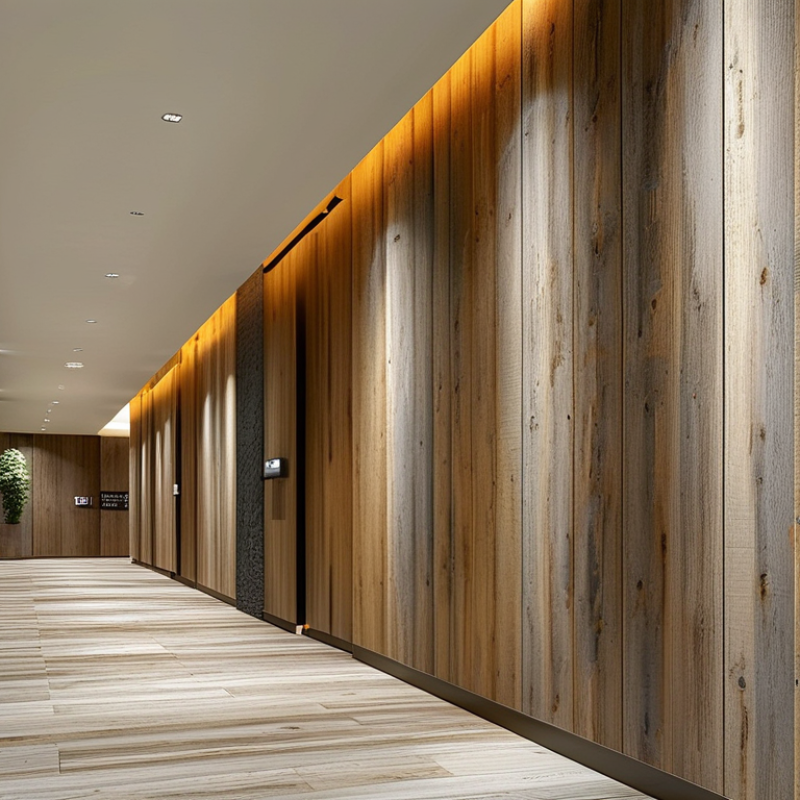
7 Best WPC Interior Wall Panels for Global Buyers?

Time:2026-09-08 Author:Henry
0%

Global demand for sustainable interior surfaces is rising, but product selection remains surprisingly uneven. Grand View Research valued the global wood-plastic composites market at approximately USD 7.1 billion in 2023. Its report projects continued growth through 2030, supported by construction, renovation, and material-substitution trends. These figures suggest opportunity, not automatic product quality.

This guide examines seven Wpc Interior Wall Panel options for international buyers. Each option deserves practical scrutiny. Look beyond wood-grain photography. Check moisture resistance, formaldehyde emissions, fire classification, dimensional stability, surface hardness, and installation requirements. A panel that performs well in a dry hotel corridor may fail beside a humid bathroom. Small details matter.

Biocomposites expert Professor Amar K. Mohanty offers a useful principle: “Performance must lead material selection, not marketing claims.” That idea should guide every comparison. Buyers should also review technical datasheets, third-party testing, warranty terms, and country-specific building requirements. Reports from MarketsandMarkets identify construction and infrastructure as important growth areas for wood-plastic composites, yet market forecasts differ by definition and region. That uncertainty deserves attention.

No panel is perfect. Some products contain recycled polymers but remain difficult to recycle after installation. Others look premium but require careful substrate preparation. The best choice balances appearance, service life, indoor air quality, maintenance, and verified environmental information. This overview is designed to help distributors, architects, contractors, and homeowners compare those factors with clearer judgment.

7 Best WPC Interior Wall Panels for Global Buyers?

What Makes WPC Interior Wall Panels Suitable for Global Buyers

What Makes WPC Interior Wall Panels Suitable for Global Buyers

WPC interior wall panels combine wood fibers and polymer materials for stable indoor decoration. Their layered structure can resist everyday moisture better than many untreated wood surfaces. This matters in coastal apartments, humid hotels, and homes with frequent temperature changes. Still, moisture resistance does not mean waterproof performance in every installation.

Global buyers also value predictable sizing and simpler installation. Panels can often be cut with standard woodworking tools and fixed over prepared walls. A lightweight panel may reduce handling costs during renovation. Some surfaces imitate oak, stone, or fabric with realistic grain and low-maintenance finishes. The details matter. Check panel thickness, density, edge accuracy, and color consistency before placing a large order.

Compliance documents should match the destination market. Ask for test reports covering emissions, fire behavior, and material composition. Confirm that the reports apply to the exact product, not a similar sample. Packaging deserves equal attention because crushed corners create expensive claims. In my sourcing experience, a small pre-shipment inspection can reveal uneven grooves, weak locking edges, or shade differences between batches. It is not perfect protection. Samples can still perform differently after long-term use, especially when ventilation is poor. Therefore, buyers should review installation guides, cleaning limits, warranty terms, and storage conditions with the supplier. Shortcuts often become visible later.

7 Best WPC Interior Wall Panels for Global Buyers? — What Makes WPC Interior Wall Panels Suitable for Global Buyers

A practical comparison of common wood-plastic composite interior wall panel formats

Panel Type Typical Construction Common Dimensions Typical Weight Recommended Interior Applications Key Advantages for Global Buyers Important Limitations Installation Profile Best-Fit Buyer Priority
WPC Slatted Acoustic Panel Decorative WPC slats mounted on a PET or mineral-fiber acoustic backing. 2400–3000 × 600 mm
Thickness: 21–25 mm
Approximately 9–14 kg/m² Feature walls, meeting rooms, media rooms, restaurants, hotel lobbies and home offices. Combines decorative wall coverage with sound absorption; modular format is suitable for both residential and commercial projects. Acoustic performance depends mainly on the backing, air gap and room construction. It is not a substitute for a complete soundproofing system. Medium
Cut panels to length, align slats and fix with adhesive or mechanical fasteners.
Design impact and improved room acoustics
WPC Fluted Wall Panel Extruded or co-extruded WPC board with repeated vertical grooves and a decorative surface film or finish. 2900–3000 × 150–200 mm
Thickness: 18–25 mm
Approximately 7–11 kg/m² Living rooms, reception areas, corridors, retail interiors, bedrooms and hospitality feature walls. Creates strong vertical lines, can visually increase ceiling height and is available in long lengths that reduce horizontal joints. Grooves can collect dust; visible color variation may occur between production batches, especially with wood-look finishes. Easy to Medium
Usually installed with construction adhesive, clips or screws over a level substrate.
Contemporary appearance and fast visual transformation
WPC 3D Decorative Panel Relief-patterned WPC surface with geometric, wave, ribbed or carved visual effects. 2900–3000 × 150–400 mm
Thickness: 20–30 mm
Approximately 8–13 kg/m² TV feature walls, retail displays, restaurant interiors, showrooms and reception counters. Provides a three-dimensional appearance without the weight and installation complexity of plaster or stone relief systems. Deep textures may require careful cleaning and precise alignment; replacement panels should be ordered from the same production batch when possible. Medium
Requires accurate layout, level substrates and careful treatment of corners and panel joints.
High visual impact and architectural detailing
WPC Marble-Look Panel WPC-based board with a printed or laminated marble-look decorative layer and protective surface coating. 2440–3000 × 1220 mm
Thickness: 5–8 mm
Approximately 4–7 kg/m² Hotel bathrooms outside direct shower zones, kitchen backsplashes, corridors, retail interiors and feature walls. Much lighter than natural marble, easier to transport and faster to install; large sheets can reduce the number of visible joints. It does not have the heat, scratch and impact resistance of natural stone. Wet-area use requires sealed joints and confirmation of the product’s water-resistance rating. Easy
Commonly bonded to a prepared wall; panel edges and penetrations must be sealed correctly.
Low weight, marble appearance and reduced installation time
WPC Wood-Grain Flat Panel Flat or lightly textured WPC board with a wood-grain film, printed finish or embossed surface. 2440–3000 × 1220 mm
Thickness: 5–10 mm
Approximately 4–8 kg/m² Bedrooms, offices, corridors, retail walls, apartment renovations and ceiling accents. Neutral wood appearance suits multiple interior styles; large sheets offer efficient coverage and relatively low packaging volume per square metre. Flat panels show substrate irregularities more clearly than profiled products, so wall preparation is important. Easy
Adhesive installation is common; mechanical fixing may be preferred for uneven substrates or commercial projects.
Balanced cost, coverage efficiency and natural appearance
WPC Stone-Look Panel Lightweight WPC composite panel with a printed, laminated or textured stone-look surface. 2440–3000 × 1220 mm
Thickness: 6–10 mm
Approximately 5–9 kg/m² Reception walls, corridors, restaurants, retail interiors, fireplace surrounds and commercial feature areas. Offers a stone-inspired finish with less structural load and simpler handling than many natural or engineered stone slabs. Performance near fireplaces or other heat sources must be checked against the supplier’s tested temperature limits and installation instructions. Easy to Medium
Requires stable adhesive bonding, accurate cutting and sealed or neatly finished joints.
Stone aesthetics with lower handling and structural demands
WPC Waterproof Wall Cladding Panel Higher-density WPC board with a moisture-resistant surface layer, sealed edge design or compatible joint system. 2400–3000 × 300–600 mm
Thickness: 8–12 mm
Approximately 6–10 kg/m² Laundry rooms, powder rooms, kitchen walls, hospitality interiors and other areas with intermittent moisture. Resists ordinary indoor humidity, is easy to wipe clean and can reduce dependence on wet-applied finishing work. “Waterproof” does not automatically mean suitable for continuous immersion or direct shower exposure. Joint sealing, ventilation and substrate condition remain essential. Easy to Medium
Use the approved adhesive or joint system and follow local wet-area installation requirements.
Moisture management and easy maintenance

Note: Dimensions, weight and thickness are typical market ranges for interior WPC panel formats, not fixed standards. Actual values vary by resin-to-fiber ratio, hollow or solid construction, surface coating, backing material and local production specifications. Buyers should request technical data sheets, fire-test classifications, VOC or emissions documentation, moisture-resistance test results and installation instructions before approving a project.

Seven Leading WPC Interior Wall Panel Types and Their Key Features

7 Best WPC Interior Wall Panels for Global Buyers

Seven Leading WPC Interior Wall Panel Types and Their Key Features

WPC interior panels combine wood fiber and polymer for stable, low-maintenance surfaces. Grand View Research reported strong growth in the global wood-plastic composites market through 2030. This trend reflects demand for moisture resistance and reduced upkeep. However, specifications vary widely between suppliers and regions.

Slatted acoustic panels use narrow ribs and felt backing to soften echoes in offices and dining areas.

Embossed woodgrain panels provide warmer visual depth without natural timber’s frequent refinishing.

Stone-look panels suit feature walls and offer a lighter installation than many mineral slabs.

Hollow-core panels reduce weight, helping renovation teams handle large formats more easily.

Moisture-resistant panels suit kitchens and bathrooms, but they still need sealed edges.

Fire-retardant grades may support safer commercial interiors when tested to EN 13501-1 or ASTM E84.

Recycled-content panels can reduce virgin material use, although their environmental value depends on documented sourcing.

The U.S. Green Building Council highlights material transparency and indoor-air-quality documentation in responsible project decisions. Buyers should request VOC test results, recycled-content evidence, dimensional tolerances, and installation instructions.

I have found that attractive samples can hide weak locking systems or uneven backing. That mistake becomes expensive on long walls. Color may also shift between production batches.

No panel is universally superior. Compare fire performance, moisture exposure, acoustic goals, and local code requirements before ordering.

How to Compare WPC Wall Panels by Design, Performance, and Cost

7 Best WPC Interior Wall Panels for Global Buyers?

Comparing WPC wall panels requires more than choosing a fashionable pattern. The seven strongest options usually include fluted, slatted, marble-look, acoustic, moisture-resistant, fire-tested, and low-maintenance designs. Check panel thickness, surface texture, color consistency, and edge finishing under natural light. A glossy finish can look premium in a sample, yet reveal scratches quickly in a busy hallway. Design is subjective, but installation errors are not.

Performance should be verified through documents, not sales language. Grand View Research estimated the global WPC market at approximately USD 7.7 billion in 2023, with annual growth above 7% projected through 2030. That growth increases product choices, but quality can vary. Ask for water absorption results, dimensional stability data, and test methods. EN 15534 or ASTM-related testing can provide useful benchmarks. For interior projects, also request formaldehyde and VOC declarations. “Eco-friendly” alone proves very little.

Cost comparison should include trims, adhesives, cutting waste, labor, shipping, and replacement risk. A lower-priced panel may become expensive after uneven walls require extra framing. In my experience, a 10% material allowance is often practical, although complex layouts may need more. Measure twice. Buyers should compare cost per finished square meter, not cost per carton. I would not pretend every report applies equally across climates; humidity, installer skill, and local fire requirements can change the result.

Installation Requirements for Different Interior Applications

7 Best WPC Interior Wall Panels for Global Buyers?

Installation Requirements for Different Interior Applications

The best WPC wall panel depends on the room, substrate, and installation method. Slatted panels suit living rooms and offices because they add texture and hide minor surface marks. Solid embossed panels work well in bedrooms, corridors, and retail interiors. Stone-look panels can create a stronger visual effect, but their joints need careful alignment.

Before installation, store panels flat indoors for at least 48 hours. Keep the room dry and close to its normal operating temperature. Concrete walls must be clean, dry, and free from loose dust. On plasterboard, installers should locate studs before using screws or clips. Uneven masonry may require timber battens or a metal frame. Leave a small expansion gap around floors, ceilings, corners, and door openings. Do not force tight joints.

Bathrooms and utility areas require extra caution. Choose panels with verified moisture resistance, seal exposed edges, and maintain ventilation. WPC is not automatically waterproof. Near sinks, showers, or heating equipment, local building requirements and product test data should guide the design. For large commercial spaces, confirm fire-performance documentation before approval.

Experienced installers usually test one panel first. This reveals color variation, joint visibility, and adhesive behavior. I have seen attractive panels fail because the wall was slightly damp. That mistake is easy to miss. Access panels may also be needed around wiring and plumbing, although they can interrupt the visual pattern. Clearance matters.

Global Buying Factors: Standards, Shipping, Warranty, and Maintenance

7 Best WPC Interior Wall Panels for Global Buyers

The best WPC interior wall panel depends on more than appearance. Global buyers should compare seven practical points: material composition, dimensional stability, surface finish, moisture resistance, safety documentation, packaging, and after-sales support. Request technical datasheets, batch information, and independent test reports before placing an order. Standards differ between markets, so a document accepted in one country may not satisfy another authority. Check fire, emissions, and installation requirements locally. Do not rely on a supplier’s summary alone.

Shipping can quietly change the final cost. Confirm panel length, pallet size, gross weight, loading method, and moisture protection. Ask for photos of packed goods, especially for long-distance sea transport. Warranty terms deserve equal attention. Read coverage periods, color-fading limits, installation exclusions, and claim procedures. A long warranty means little without clear evidence requirements. In practice, a perfect specification can still fail when installers cut corners. That risk should be discussed early.

Tips: Order samples from the same production line when possible. Inspect edges, tongue-and-groove accuracy, odor, and color under natural light. Keep several spare panels for future repairs. Clean surfaces with a soft cloth and mild detergent. Avoid abrasive pads and strong solvents. Maintenance is simple, but not effortless. Record lot numbers and installation photos. These details can support a warranty claim and reveal problems before a full shipment is installed.

7 Best WPC Interior Wall Panels for Global Buyers

Global buying factors: standards, shipping, warranty, and maintenance

The chart summarizes common planning ranges used when comparing WPC interior wall panels: typical warranty coverage is about 5–10 years, expected indoor service life is commonly estimated at 10–20 years, routine cleaning is generally required 1–4 times per year depending on exposure, and panel thickness is often 8–12 mm. Buyers should verify product-specific fire classification, formaldehyde emissions, moisture resistance, packaging dimensions, and warranty terms before purchase. Relevant reference frameworks may include EN 13501-1, ASTM E84, and EN 717-1.

FAQS

: What are WPC interior wall panels made from?

: They combine wood fiber and polymer. This creates stable, low-maintenance surfaces with a timber-like appearance.

Which WPC panel type suits offices or dining areas?

Slatted acoustic panels work well in these spaces. Narrow ribs and felt backing can soften echoes.

Are WPC panels suitable for bathrooms and kitchens?

Moisture-resistant panels can suit these rooms. Seal exposed edges and maintain ventilation. WPC is not automatically waterproof.

What should buyers check before ordering panels?

Request VOC results, water absorption data, dimensional tolerances, and installation instructions. Recycled-content claims also need clear evidence.

How should panels be stored before installation?

Store them flat indoors for at least 48 hours. Keep the room dry and near its normal operating temperature.

What wall conditions can cause installation problems?

Dusty, damp, or uneven walls can weaken adhesives and create visible gaps. Battening or framing may be necessary.

How can buyers compare panel costs accurately?

Compare the finished cost per square meter. Include trims, adhesives, cutting waste, labor, shipping, and possible framing.

Are attractive samples always reliable?

Not always. A sample may hide weak joints, uneven backing, scratches, or color changes between production batches.

What safety documents are important for commercial interiors?

Request verified fire-performance documents and check local building requirements. Do not rely only on phrases like “fire-retardant.”

How much extra material should buyers allow?

A 10% allowance is often practical. Complex patterns or many openings may require more. My estimate could still be wrong.

Conclusion

Choosing the right Wpc Interior Wall Panel can help global buyers achieve a balance of style, durability, and practical value. This guide introduces seven major panel types, including wood-grain, solid-color, fluted, acoustic, waterproof, fire-resistant, and decorative designs. It explains how each option suits different interior applications, from residential rooms and offices to hotels, retail spaces, and other commercial environments. Buyers will also learn how to compare panels by appearance, surface quality, dimensional stability, moisture resistance, installation method, and total cost.

The article further reviews installation requirements, such as wall preparation, cutting tools, fixing systems, ventilation, and professional handling. For international purchasing, it highlights the importance of product standards, technical documentation, packaging, shipping protection, warranty terms, spare materials, and long-term maintenance. By evaluating design, performance, application needs, logistics, and after-sales support together, buyers can select WPC interior wall panels that deliver reliable results across different climates and project conditions.

Henry

Henry

Henry is a dedicated marketing professional with a profound expertise in the company's offerings. With years of experience in the industry, he possesses an impressive understanding of the market dynamics and consumer behaviors that drive success. Henry is committed to sharing his insights through......