Choosing the best China WPC Fluted Wall Panel supplier requires more than comparing catalog prices. Global buyers need consistent profiles, stable colors, reliable packaging, and clear technical evidence.
Dr. Michael Carus, a respected biocomposites researcher and founder of nova-Institute, offers a useful warning: “Biobased does not automatically mean sustainable.” His statement applies directly to WPC Fluted Wall Panel sourcing. A responsible supplier should explain its wood fiber content, polymer composition, production controls, and environmental claims. Beautiful grooves are not enough.
Look closely.
During supplier evaluation, request physical samples before approving a large order. Run your fingers across the flutes. Check whether the surface feels even, whether edges chip during cutting, and whether panels remain straight after storage. Ask for test reports covering dimensional stability, moisture resistance, fire performance, and formaldehyde emissions, where relevant to the project.
Experienced exporters should also provide installation guidance, carton dimensions, loading photos, and batch identification. These details reduce surprises at the job site. However, no supplier is perfect. Color variation can still appear between production batches, especially with textured finishes. Buyers should confirm acceptable tolerances in writing.
The strongest China WPC Fluted Wall Panel supplier is not always the cheapest factory. It is the partner that communicates limitations honestly, supports inspection, and maintains repeatable quality. This guide examines supplier capability, material performance, customization, certification, export experience, and after-sales support. Some claims may sound impressive. Verify them carefully.
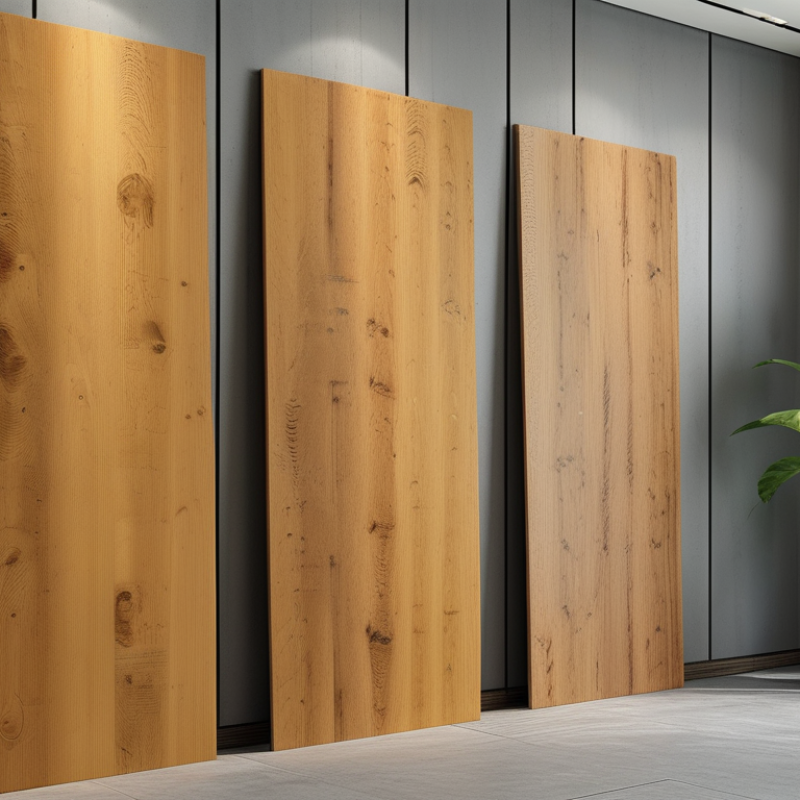
WPC fluted wall paneling combines wood fiber, polymer resin, and performance additives through an extrusion process. Its face contains repeated vertical grooves, creating shadow lines and a ribbed architectural texture. The material is usually installed as interior feature walls, ceilings, reception areas, and sheltered commercial spaces. It is not solid wood.
Grand View Research estimated the global wood plastic composite market at about USD 7.13 billion in 2023, with projected growth of roughly 7.4% annually from 2024 to 2030. This broader figure includes decking, automotive parts, and building products, not wall panels alone. Still, it reflects growing interest in wood-polymer materials. The report also reminds buyers that market growth does not remove the need for product testing.
In practical use, a panel may be cut with standard woodworking tools and fixed over a level, dry substrate. Leave movement gaps near corners and ceilings. Uneven walls can transfer visible waves into the fluted surface. That detail is often underestimated. WPC resists moisture better than untreated wood, but it is not waterproof in every installation. Prolonged heat, direct sunlight, or poor ventilation may cause expansion, fading, or odor. The U.S. Forest Products Laboratory notes that composite performance depends strongly on formulation, moisture exposure, and processing quality. Buyers should request density, dimensional stability, fire-test results, formaldehyde data, and installation guidance. Sample panels matter, because printed color charts rarely show the full texture. A careful supplier should provide batch information and realistic tolerances, even when those figures seem inconvenient.
China Best WPC Fluted Wall Panel Supplier for Global Buyers?
WPC fluted wall panels combine wood flour, polymer resin, pigments, and performance additives. The mixture is heated and pushed through a shaped extrusion die. Cooling calibrators then control thickness and surface geometry. Some factories add embossing, co-extrusion, or film lamination. The grooves must remain consistent under light reflection.
Grand View Research estimated the global wood-plastic composites market at about USD 7.06 billion in 2023. Its report projected approximately 6% annual growth from 2024 to 2030. This growth supports wider architectural use, but market figures vary by product scope. Some reports include decking and automotive parts, not only wall panels.
Manufacturers commonly classify fluted panels by polymer type, core structure, surface finish, and installation method. PVC-based cores resist moisture well and suit humid interiors. PE or PP systems may offer different impact and temperature performance. Hollow panels reduce weight, while solid panels generally provide better rigidity and acoustic mass. Surface classes include wood-grain film, printed coating, and co-extruded color layers.
Quality checks should measure density, water absorption, dimensional change, and peel strength. Fire performance requires independent testing, not visual judgment. A panel may look premium yet fail at a weak edge. That detail is often overlooked. Buyers should request batch records, test standards, and samples after installation. Classification helps comparison, but it is not perfectly uniform across suppliers.
WPC fluted wall panels are commonly produced by blending wood fiber or wood flour with a thermoplastic polymer and additives. The compound is heated, extruded through a fluted profile die, cooled, cut to length, and finished with surface treatments such as co-extrusion, sanding, or wood-grain embossing. The chart shows representative non-brand specification examples commonly found in the market; actual dimensions vary by manufacturer and application.
WPC fluted wall panels combine wood-fiber texture with polymer durability. From site inspections, I have found them practical for hotels, offices, and retail interiors. Their fluted surfaces add depth without heavy stone or timber construction. They also conceal minor wall irregularities better than flat decorative sheets. Moisture resistance helps in humid areas, but it does not mean complete waterproofing. Proper sealing remains important.
Installation can be efficient when panels use accurate grooves, stable backing, and clear fixing instructions. Workers can cut sections on site with common woodworking tools. This reduces dust, noise, and installation time compared with masonry finishes. The vertical lines may also make narrow corridors appear taller. Some profiles provide limited sound diffusion, although they should not replace tested acoustic systems. Performance depends on the room, wall structure, and panel density.
Maintenance is simple: a soft cloth and mild cleaner usually remove daily dust. They are not perfect. Dark finishes can reveal fingerprints, while poor batches may show uneven color or warped edges. Global buyers should request samples, dimensional tolerances, test reports, and packaging details before ordering. A dependable supplier should explain moisture limits, fire-performance data, installation methods, and replacement procedures clearly. Factory inspection and pre-shipment checks can prevent costly surprises. Loose packaging can still damage corners during long-distance transport, so this detail deserves careful review.
Choosing a China WPC fluted wall panel supplier requires more than comparing catalog prices. Begin with a physical sample, not only digital images. Check the panel’s surface consistency, flute depth, edge finish, and color under daylight. Details matter. Ask for technical data covering density, thickness tolerance, moisture resistance, and recommended installation spacing.
A reliable supplier should provide recent test reports from recognized laboratories, with clear product identification and test dates. Confirm whether the reports match the exact panel series you plan to purchase. Request production photos, packaging details, and a quality-control checklist. A practical supplier will explain how panels are inspected before loading and how damaged cartons are handled. Communication is evidence. Slow, vague replies may create larger problems during installation.
Evaluate experience through project references, export markets, and technical support after shipment. Ask whether the supplier can produce matching trims, corner pieces, and replacement panels. Sample the packing method by checking carton strength and moisture protection. I have seen attractive panels arrive with crushed edges because packaging received less attention. That lesson is easy to miss. Also compare lead times realistically, including approval, production, inspection, and transport. No supplier is perfect, so discuss tolerances and possible color variation before signing an order. Ask again when an answer sounds too convenient.
| Evaluation Category | Key Data Dimension | Practical Benchmark for Global Buyers | Recommended Verification Evidence | Suggested Weight | Scoring Guidance |
|---|---|---|---|---|---|
| Product Construction | Panel composition | Wood-plastic composite made from wood fiber or wood flour, thermoplastic polymer, and performance additives. The supplier should disclose the main material categories and approximate composition range. | Technical data sheet, material declaration, and sample cross-section inspection. | 10% | Full score when the composition is clearly documented and consistent between samples and production orders. |
| Product Dimensions | Thickness, width, and length tolerance | Common decorative fluted panels are often supplied around 8–10 mm thick, with project-specific widths and lengths. Tolerances should be stated in writing rather than described only as “standard.” | Approved drawing, dimensional inspection report, and random measurement of packaged goods. | 8% | Full score when tolerances are defined, measurable, and suitable for the installation system. |
| Surface Quality | Flute consistency and finish uniformity | Flute spacing, depth, color, gloss, and texture should remain visually consistent across one batch. The supplier should define acceptable limits for scratches, color variation, and edge damage. | Golden sample, approved color card, production inspection photos, and pre-shipment inspection. | 10% | Full score when the supplier uses a signed reference sample and provides clear defect criteria. |
| Mechanical Performance | Flexural strength and dimensional stability | Performance must be supported by a test report using a stated method. Results should be compared with the intended application, especially for long panels, wall-mounted systems, and areas exposed to temperature changes. | Third-party or accredited laboratory report showing test method, specimen dimensions, date, and batch traceability. | 10% | Full score when test conditions are transparent and the results apply to the actual panel structure. |
| Moisture Resistance | Water absorption and use environment | WPC is moisture-resistant but is not automatically waterproof in every construction detail. The supplier should specify whether the product is intended for dry interiors, humid interiors, semi-outdoor areas, or exterior exposure. | Water-absorption test report, installation instructions, edge-treatment requirements, and warranty limitations. | 10% | Full score when the declared application matches the project environment and installation details are provided. |
| Fire Safety | Reaction-to-fire classification | Fire performance depends on formulation, thickness, installation, and facing materials. A valid classification should be stated under the required market standard instead of using an unsupported claim such as “fireproof.” | Current fire-test report or classification report from a competent laboratory, including the tested assembly. | 12% | Full score when the report covers the exact product and installation configuration required by the project. |
| Indoor Air Quality | Formaldehyde and VOC emissions | For indoor projects, request emissions documentation. Under EN 717-1, the E1 limit for formaldehyde release is 0.124 mg/m³ or less in the applicable test chamber method. | Emission test report identifying the product, test method, sample date, and laboratory details. | 10% | Full score when the evidence is current and the tested product matches the proposed production specification. |
| Color and UV Stability | Light and weathering resistance | For sunlit or exterior applications, the supplier should provide an accelerated-weathering result and define the expected appearance change. Indoor decorative products may require a lower level of testing. | Accelerated-weathering report, color-difference data where available, and application limitations. | 8% | Full score when the test duration, exposure conditions, and acceptance criteria are disclosed. |
| Quality Management | Batch control and inspection process | A reliable supplier should use incoming-material checks, first-piece approval, in-process inspection, final inspection, and batch records. Inspection frequency and acceptance criteria should be documented. | Quality-control plan, inspection checklist, nonconformance procedure, and sample batch records. | 10% | Full score when inspection records are traceable from raw materials through final packing. |
| Customization Capability | Profiles, colors, lengths, packaging, and project samples | The supplier should confirm available minimum order quantities, tooling charges, sample lead time, color-matching process, and tolerance for customized profiles before quotation. | Written quotation, tooling drawing, sample approval form, and customization timeline. | 5% | Full score when all commercial and technical conditions are confirmed before mass production. |
| Supply Reliability | Production capacity and lead-time control | Lead time should be quoted by order type: samples, standard items, customized items, and repeat orders. The supplier should state production capacity and how delays are communicated. | Capacity statement, production schedule, historical on-time delivery data, and contingency plan. | 5% | Full score when lead times are measurable and supported by documented production planning. |
| Packaging and Logistics | Protection, loading efficiency, and export documents | Packaging should protect flute edges and finished surfaces against abrasion, moisture, and compression. Carton or pallet dimensions, packing quantity, gross weight, and loading plan should be confirmed. | Packaging specification, loading photos, packing list, commercial invoice, and export documentation sample. | 5% | Full score when packaging is tested or proven suitable for the transport route and handling conditions. |
| Commercial Risk | Warranty, payment terms, and claim handling | The contract should define warranty period, exclusions, acceptable color or dimensional variation, inspection window, replacement process, and responsibility for verified defects. | Sales contract, warranty document, quality-claim procedure, and agreed inspection terms. | 7% | Full score when responsibilities, remedies, and inspection procedures are written in the contract. |
| Total Supplier Evaluation Weight | 100% | Prioritize verified documentation and product samples over price alone. | |||
China-made WPC fluted wall panels attract global buyers through flexible designs, competitive pricing, and scalable production. Export readiness, however, requires more than a product catalog. Ask for packing photos, pallet dimensions, loading plans, and complete technical documents before placing an order. Confirm moisture protection during sea transport, especially for long routes and humid ports. Import duties, labeling rules, and fire-rating requirements also vary by destination.
Quality should be checked through physical samples and controlled specifications. Compare flute depth, panel thickness, surface consistency, color tolerance, and edge straightness. A sample may look perfect. That gap deserves attention. Request batch photos and inspection records from actual production, not only showroom pieces. WPC can expand with temperature changes, so a supplier should provide test data and clear installation limits. Honest suppliers should also explain acceptable color variation and possible extrusion marks.
Installation planning affects the final appearance as much as manufacturing quality. Store panels flat, dry, and away from direct sunlight before fitting. Use a level substrate, suitable fasteners, and expansion gaps recommended for the local climate. Corners and joints need early planning; rushed cutting often creates visible lines. On large projects, install a small trial section first and check lighting at different times. One practical weakness remains: online discussions often underestimate labor costs. Buyers should price trims, tools, waste, skilled installers, and future replacement panels before approving the order.
Wood flour, polymer resin, pigments, and additives are mixed together. The heated mixture passes through a shaped extrusion die. Cooling calibrators control thickness and groove geometry. Some factories add embossing or surface film. Grooves must stay consistent.
Classification usually considers polymer type, core structure, surface finish, and installation method. PVC-based cores generally suit humid interiors. PE and PP systems offer different impact and temperature performance. Hollow panels reduce weight. Solid panels usually provide greater rigidity.
No. Moisture resistance is not complete waterproofing. Proper sealing remains important around edges and joints. PVC-based panels may perform well in humid rooms. However, standing water can still create problems. Do not assume too much.
Fluted surfaces add depth without heavy stone or timber construction. They can hide minor wall irregularities better than flat sheets. Vertical grooves may make narrow corridors appear taller. Panels also support efficient interior installation. The visual effect depends on lighting.
Workers can often cut sections with common woodworking tools. Accurate grooves and stable backing help reduce installation difficulties. Clear fixing instructions remain necessary. The wall structure still matters. Small errors show clearly.
Some profiles provide limited sound diffusion. Their acoustic effect depends on room shape, density, and wall construction. They should not replace tested acoustic systems. A decorative groove is not an acoustic guarantee. Results may disappoint.
Buyers should request density, water absorption, and dimensional-change data. Peel strength testing can reveal weak surface bonding. Fire performance requires independent testing. Visual inspection alone is unreliable. A premium-looking panel may fail at a weak edge.
Buyers should review packaging details before long-distance transport. Loose packaging can damage corners during handling. Pre-shipment inspection may prevent costly surprises. Daily dust usually needs only a soft cloth and mild cleaner. Dark finishes can show fingerprints. Poor batches may contain uneven color or warped edges.
A Wpc Fluted Wall Panel is a decorative and functional wall solution made from a blend of wood fiber, polymer materials, and selected additives. Its fluted surface creates depth, texture, and a modern architectural appearance, making it suitable for residential, commercial, hospitality, and other interior or sheltered exterior projects. Depending on the manufacturing process, panels may differ in core composition, surface finish, dimensions, fire performance, moisture resistance, and installation structure.
For global buyers, selecting the right Wpc Fluted Wall Panel supplier requires careful evaluation of material consistency, production capability, quality control, customization options, packaging, and export experience. Buyers should confirm product specifications, testing documents, color stability, dimensional accuracy, and compatibility with local installation conditions. Reliable suppliers should also provide clear technical guidance, efficient communication, secure packaging, and practical installation instructions. By comparing quality, service, lead times, and total project cost, buyers can choose panels that deliver lasting visual appeal, stable performance, and dependable value across different markets.