7 Galvanized Steel Stud Buying Tips for Global Buyers

Time:2026-11-15 Author:Charlotte
0%

Global sourcing can make a familiar building component harder to judge. A Galvanized Steel Stud may look consistent across catalogs, yet coating weight, steel thickness, dimensions, and forming quality can differ. These differences affect corrosion resistance, load performance, installation, and total project cost. A low unit price is not always a saving.

Buyers need clear specifications before requesting quotations. Confirm the required profile, base-metal thickness, coating designation, length tolerance, and applicable test documents. Ask how products are packaged and protected during ocean freight. A bundle arriving with bent edges or damaged coating can disrupt a schedule. Small details matter.

Supplier claims also deserve careful review. Check production capability, inspection procedures, sample consistency, and communication during order changes. Where practical, compare samples against drawings and project requirements. Do not assume that a familiar product name guarantees identical performance across markets. Standards and project needs vary, so verify the relevant requirements with your design team or qualified inspector.

Even a thorough checklist cannot remove every risk. Trade-offs remain between price, lead time, finish, and availability. Revisit your assumptions when a quotation seems unusually attractive or a specification feels vague. The following seven buying tips offer a practical framework for comparing suppliers, clarifying technical details, and making more informed purchasing decisions. A little extra checking can prevent costly surprises later.
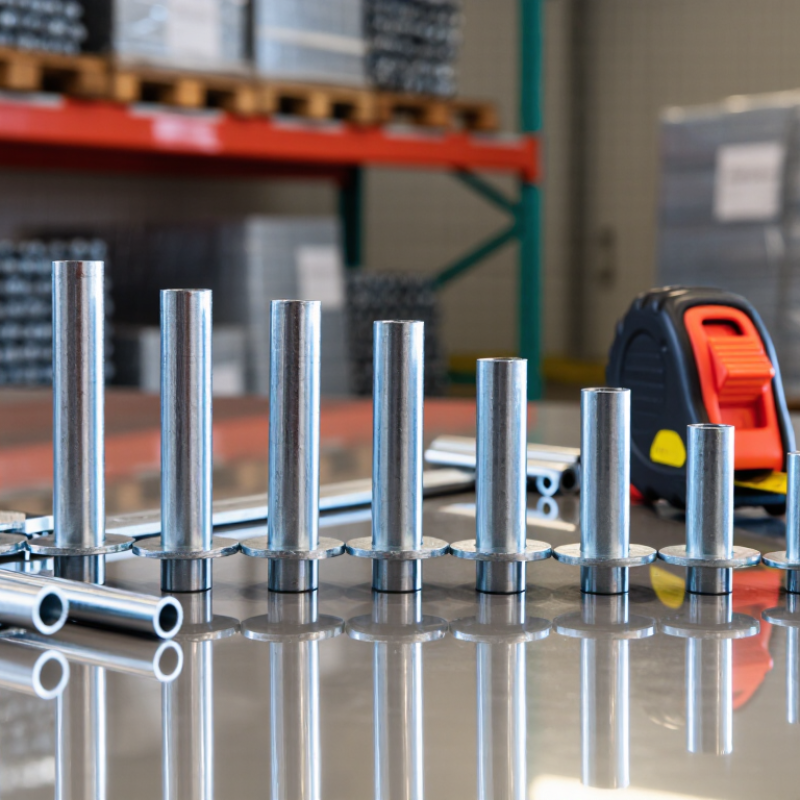
7 Galvanized Steel Stud Buying Tips for Global Buyers

Define Galvanized Steel Studs and Their Main Applications

Galvanized steel studs are cold-formed steel members with a zinc coating that helps limit corrosion. They are commonly C-shaped vertical members installed between floor and ceiling tracks. The track holds the studs in position. Together, they create a frame for wallboard, sheathing, or other finishes. AISI’s cold-formed steel framing standards describe requirements for these structural and nonstructural wall systems. “Galvanized” does not mean rust-proof; coating type, thickness, exposure, and detailing still matter.

Builders use studs in interior partitions, exterior wall framing, ceiling systems, and some modular construction. In offices, they can form straight, lightweight partitions around doors and service openings. In exterior assemblies, designers coordinate them with insulation, sheathing, and moisture-control layers.

The U.S. Census Bureau estimated 2024 construction spending at about $2.15 trillion, showing the scale of the building market—not the market share of steel studs.

That distinction matters. A large construction total does not tell buyers which framing system suits a project. Check load requirements, stud spacing, coating specification, and local exposure conditions before comparing products. A small mismatch can complicate installation.

Match Stud Dimensions and Coating to Project Requirements

For galvanized steel studs, match the section dimensions to the wall design, not just the quoted price. Check web depth, flange width, steel thickness, and stud length against drawings and track dimensions. A 92 mm web, for example, may suit one partition but leave too little room for services in another. Measure twice. Confirm tolerances too; small variations can complicate alignment across a long wall.

Coating requirements depend on exposure and handling. For dry interior partitions, the specified zinc coating may differ from what is needed in humid areas or during extended outdoor storage. Ask for the coating designation and supporting inspection documents, rather than relying on a general “galvanized” description. Pay attention to cut ends, scratched surfaces, and compatible screws. A durable coating helps, but it does not make every installation condition harmless.

Before ordering internationally, compare the supplier’s dimensions and coating details with the project specification in writing. Clarify whether thickness refers to base steel or total coated thickness, since those figures are not interchangeable. Check bundle labels and sample measurements before approving a large shipment. Small details matter. One point is easy to overlook: a technically correct stud can still be unsuitable if its length, packaging, or delivery schedule does not fit the site’s installation plan.

Check Material Quality, Standards, and Test Documentation

7 Galvanized Steel Stud Buying Tips for Global Buyers

Galvanized steel studs may look alike, but coating weight, base-metal thickness, and strength can differ. The World Steel Association’s World Steel in Figures 2024 reports 1,892.2 million tonnes of crude steel produced in 2023. That scale makes clear, traceable specifications essential when comparing suppliers. Ask for the exact steel grade, nominal thickness, and coating designation—not just “galvanized.”

Check that the product specification names the applicable standard, such as ASTM A653/A653M or EN 10346, and identifies the required coating class. Do not assume designations under different standards are interchangeable. Request a mill test certificate linked to the shipment’s heat or batch number. It should show measured thickness, mechanical properties, coating results, test methods, and acceptance criteria. Paperwork matters.

A certificate can still contain gaps. Compare its batch numbers with labels on bundles, then check several studs for actual dimensions and visible coating damage. For coating measurements, confirm whether results are reported by mass or thickness and which method was used. Keep the records with purchase documents; they help resolve discrepancies later. A neat document is useful, but matching the document to the delivered material is the real check.

7 Galvanized Steel Stud Buying Tips for Global Buyers — Check Material Quality, Standards, and Test Documentation

Buying tip What to specify or check Useful standards or references Evidence to request
1. Confirm the steel grade and intended use Identify whether the studs are non-load-bearing or load-bearing, and specify the required steel grade and mechanical properties. Do not assume products with similar dimensions have the same structural capacity. ASTM C645 covers nonstructural steel framing members; ASTM C955 covers load-bearing steel framing members. ASTM A1003/A1003M covers steel sheet for cold-formed framing applications. Product specification and a material test certificate identifying the steel grade, relevant mechanical properties, and material heat or coil.
2. Verify base-metal thickness State the required base-metal thickness (BMT), not only an overall thickness that may include the metallic coating. Specify the measurement method, tolerances, and units in the purchase order. Use the applicable product standard and the project specification for thickness tolerances and measurement requirements. Mill or inspection records showing measured thickness, measurement locations, and whether the stated value is BMT or coated thickness.
3. Check the zinc coating designation Specify the required coating type and designation for the exposure conditions. For example, ASTM A653/A653M uses designations such as G60, while EN 10346 uses designations such as Z275. These refer to coating mass, not a direct service-life guarantee. ASTM A653/A653M for zinc-coated or zinc-iron-alloy-coated steel sheet; EN 10346 for continuously hot-dip-coated steel flat products. ASTM A90/A90M is a test method for coating mass. Coating designation on the certificate and coating-mass test results. Confirm whether the stated coating mass is the total for both sides, as specified by the applicable standard.
4. Check dimensions and forming details Confirm web depth, flange width, lip size, cut length, punched-hole layout, and dimensional tolerances. Check that the profile matches the intended track, board system, and installation details. Applicable product standards, approved drawings, and project-specific dimensional tolerances. EN 14195 applies to metal framing components for gypsum plasterboard systems in its scope. Dimensioned drawings, production inspection records, and sample measurements of the finished profile.
5. Match standards to the destination market List the required standard, edition, product category, and any local code or project requirements in the contract. A standard for coated sheet is not, by itself, proof that a finished stud meets a framing-member standard. Common references include ASTM C645, ASTM C955, ASTM A1003/A1003M, ASTM A653/A653M, EN 14195, and EN 10346. Confirm current editions and local applicability before ordering. A compliance statement that names the specific standard and edition, plus supporting test or inspection records where required.
6. Review test methods and results Check that results correspond to the ordered grade, thickness, coating, and production lot. Specify required tests and acceptance criteria in advance; avoid treating a single corrosion test as a direct prediction of field service life. ASTM A90/A90M addresses metallic-coating mass measurement; ASTM A370 provides mechanical testing methods for steel products. The applicable product standard may set additional requirements. Test reports identifying the sample, test method, result, date, and laboratory. Confirm that sampling and acceptance criteria match the contract.
7. Require traceable documentation and delivery checks Ensure the paperwork links the delivered bundles to the production coil or heat and to the purchase-order specification. Check labels, quantities, packaging, and visible damage on arrival. Where agreed and applicable, EN 10204 describes types of inspection documents for metallic products. The required document type should be stated in the purchase order. Inspection certificate or material test certificate, lot and coil identification, packing list, product labels, and records of any agreed independent inspection.

Note: Standard designations and requirements can vary by product type, market, and edition. Confirm the governing specification, coating basis, tolerances, and acceptance criteria in the contract before production.

Evaluate Suppliers, Production Capacity, and Customization

A reliable galvanized steel stud supplier should provide more than a polished catalogue. Ask for recent production records, typical lead times, and the monthly output available for your project. Compare those figures with your order volume, including repeat shipments. A large stated capacity means little if rolling lines are already booked. Request sample sections and check flange width, web depth, straightness, and cut ends with simple measuring tools. Look closer.

Production control matters as much as speed. Ask how the supplier verifies steel thickness and zinc coating, and whether inspection results can be linked to a batch number. Review a sample inspection report before placing a large order. Confirm how defects are handled and who responds when dimensions fall outside the agreed tolerance. Paperwork is only a start. A useful answer should describe actual checks, not just promise “consistent quality.”

Customization can involve stud length, profile dimensions, punched service holes, or packaging for container loading. Send a clear drawing with tolerances and hole locations, then request a trial piece before approving a full run. Confirm whether a change requires new tooling, adds setup time, or affects minimum order quantity. I would not assume a quick sample guarantees a smooth bulk run; it is worth checking whether the production line can repeat the same settings. No checklist catches everything. Keep approved drawings, coating requirements, and delivery dates in writing.

Compare Total Cost, Shipping, and Delivery Risks

Galvanized steel studs may have a low unit price, but that figure rarely tells the full story. Compare the quote with coating specification, thickness, length tolerance, packing, inland haulage, ocean freight, insurance, and destination handling. A bundle that saves $40 may cost more if its dimensions require extra handling or create unusable offcuts. Ask how the weight was calculated and whether packaging is included. Small detail. Big difference.

Tip: Request a landed-cost comparison using the same stud size, coating, quantity, and delivery point. Confirm the loading port, transit window, container limits, and who pays for unloading or storage. Allow time for port congestion and customs clearance. An estimated arrival date is not a guaranteed site date.

Delivery risk deserves equal attention. Check how bundles are protected from moisture and abrasion, and request dispatch photos. Specify bundle labels, piece counts, and the documents your receiving team needs. Plan an arrival inspection, especially if the studs will be concealed inside walls. If a shipment is delayed, can the project use another size temporarily? Sometimes it cannot. Put that constraint into the purchase decision, not a rushed email after booking. Compare total cost, not only steel price, and revisit assumptions when freight rates or schedules change.

7 Galvanized Steel Stud Buying Tips for Global Buyers

Compare estimated landed cost, shipping, and delivery risk before placing an order.

Illustrative planning estimates in USD per metric ton, not supplier quotes. The model assumes a 20-ton order: full-container ocean freight (35 days), less-than-container-load ocean freight (45 days), and expedited ocean freight (25 days). Duties vary by destination and are excluded. Confirm product specifications, packaging, Incoterms, freight quotes, customs charges, and delivery dates before ordering.

FAQS

What are galvanized steel studs?

They are cold-formed steel members with a zinc coating that helps limit corrosion. Many have a C-shaped profile.

How do studs and tracks form a wall frame?

Vertical studs sit between floor and ceiling tracks. The tracks hold them in position for wallboard or other finishes.

Where are galvanized steel studs commonly used?

They can frame interior partitions, exterior walls, ceilings, and some modular buildings. A doorway is one common detail.

Does galvanized steel mean rust-proof?

No. Coating type, thickness, exposure, and installation details still matter. Moisture can be a problem.

What should buyers check before choosing studs?

Check load needs, spacing, coating specifications, and local exposure. A small mismatch can complicate installation.

Why compare more than the unit price?

Include thickness, length tolerance, packing, freight, insurance, and destination handling. A cheaper bundle may create costly offcuts.

What delivery details should a buyer confirm?

Confirm the loading port, transit window, container limits, unloading costs, and possible storage fees. Arrival estimates are not guarantees.

How can a shipment be checked on arrival?

Request dispatch photos and clear bundle labels. Count the pieces and inspect for moisture or abrasion before the studs are concealed.

What if a shipment arrives late?

Check whether another stud size can work temporarily. Sometimes it cannot. I might be overchecking, but that constraint belongs in the purchase decision.

Conclusion

Choosing a Galvanized Steel Stud for an international project involves more than comparing prices. Start by confirming what the studs will support and where they will be used, then match their dimensions, thickness, and protective coating to the project’s loads, environment, and installation requirements. Check that the material meets the specifications you need, and request clear test records and quality documentation before placing an order.

Also assess whether a supplier can consistently meet your required quantities, production schedule, and customization needs. Compare the full delivered cost—not just the unit price—by accounting for packaging, freight, lead times, and possible delays. Reviewing these factors together helps buyers make informed decisions, reduce procurement risks, and select studs that are suitable for their application and delivery schedule.


Charlotte

Charlotte

Charlotte is a seasoned marketing professional with a deep understanding of the company's portfolio and a passion for elevating its presence in the market. With a keen eye for detail and a commitment to excellence, she ensures that our professional blog is regularly updated with insightful articles......