SPC Flooring has become a popular choice for kitchens, entryways, and busy family rooms. Its rigid core is designed to resist dents and everyday moisture, while a printed layer creates the look of oak, stone, or concrete. Still, “waterproof” needs a closer look. A plank may tolerate spills, but water can travel through gaps, edges, or poorly sealed transitions.
A useful expert insight would clarify that distinction, but no source or verified specialist quotation was provided. I won’t invent a name or attribute a made-up statement to a real person. For a trustworthy guide, add a quotation only after confirming the expert’s identity and exact wording.
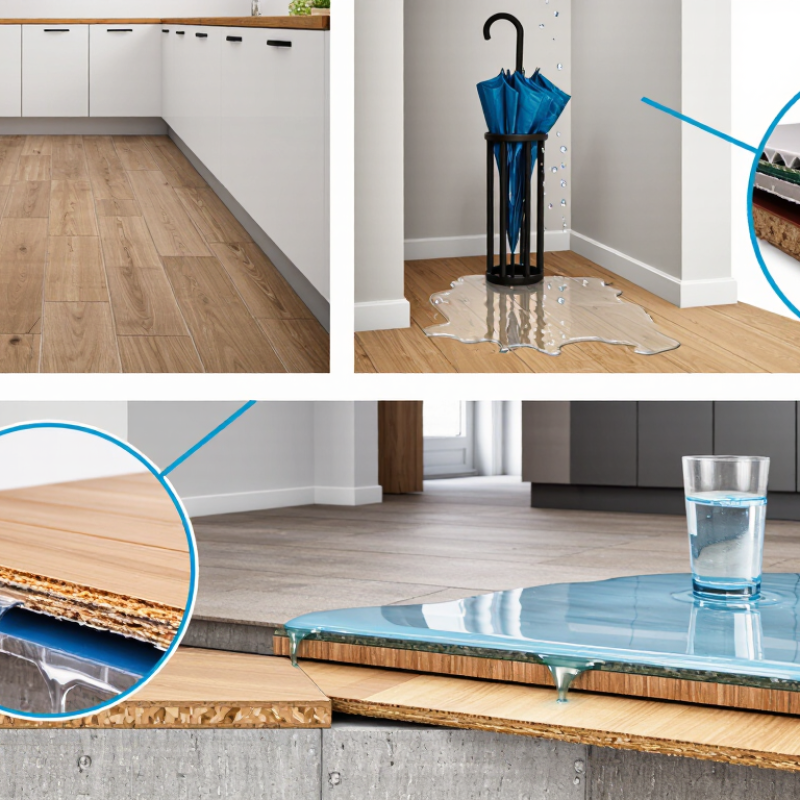
The sections ahead explain what SPC flooring contains, how its core differs from laminate and standard vinyl, and what waterproof claims mean in daily use. Picture a wet umbrella left beside the front door, or a glass tipping near the kitchen island. Those small moments reveal why surface resistance and installation details both matter. The guide also covers seams, subfloors, room conditions, and care. SPC can be a practical option, but it is not a cure for every moisture problem. Even a strong plank has limits. Readers should check the product instructions and warranty before installation, since specifications vary between brands.
What Is SPC Flooring?
SPC flooring means stone plastic composite flooring, a type of rigid-core vinyl plank. Its central layer typically combines limestone powder, PVC, and stabilizers, though exact formulas vary. Above the core, a printed film gives the plank its wood or stone appearance. A clear wear layer protects that image from everyday scuffs. Many products also include an attached backing pad.
The rigid core helps a plank resist dents and hold its shape under normal indoor conditions. Still, it is not indestructible. A heavy object dragged across the floor can mark the surface, and a poorly prepared subfloor may show through as uneven spots. Small details matter. The name can sound more precise than it is, because thickness, wear-layer construction, and installation requirements differ between products.
The core itself is generally waterproof, so spills can usually be wiped away without swelling the plank. But the floor is not necessarily a sealed surface. Water may pass through joints or edges, especially if installation is careless or moisture remains unnoticed. Not quite. Check the product’s installation instructions, and address dampness beneath the floor before laying it.
How Is SPC Flooring Made?
SPC flooring is made from a rigid composite core, usually combining limestone powder, polyvinyl chloride, and stabilizing additives. The ingredients are measured and blended into a fine, consistent mixture. The proportions matter: they influence the board’s stiffness, weight, and ability to hold its shape. Small differences in production can affect the finished feel.
The compound is heated and formed into a dense core, often through extrusion. Layers are then assembled: a printed film creates the wood or stone pattern, while a clear wear layer helps resist everyday scuffs. A protective surface coating may be added above it. The layered sheet is pressed together, cooled, and cut into planks. Then it cools. Manufacturers shape locking edges and inspect boards for thickness, surface defects, and fit. Not every plank is perfect.
Because its core absorbs little moisture, SPC is commonly described as waterproof. But that does not make every floor installation immune to water damage. Spills can still reach seams, edges, or the subfloor, especially if joints are poorly fitted or water sits for a long time. The core is only one part of the system. Good installation and prompt cleanup still matter.
What Makes SPC Flooring Waterproof?
SPC flooring is built around a rigid core made mainly from calcium carbonate and PVC. Unlike wood-based laminate, this core contains no wood fibers that readily absorb water and swell. That composition helps the plank resist moisture. But “waterproof” usually describes the plank itself, not every seam, cut edge, or wall junction.
ASTM International’s F3261 specification covers resilient flooring with rigid polymeric cores. It provides a recognized product-testing framework, but it does not certify an installed floor as leakproof. ASTM F2199 measures dimensional stability in resilient flooring after heat exposure; its results are reported as dimensional change, often as a percentage. These standards offer useful context, but neither replaces product-specific water-resistance test results. Ask for the actual test method and exposure time. Details matter.
In a kitchen, water sitting on an intact plank may be easy to wipe away. Water that slips between planks can still reach the subfloor, especially near a dishwasher or doorway. That is the weak spot. Check the manufacturer’s installation instructions for joint sealing, perimeter gaps, and wet-area limits. A tight click-lock joint reduces entry risk, but it is not a substitute for sound installation. Even durable flooring can disappoint when water stays trapped underneath.
What Is SPC Flooring and Is It Waterproof? - What Makes SPC Flooring Waterproof?
| Topic |
What It Means |
What to Know About Water |
| What SPC flooring is |
SPC stands for stone plastic composite or stone polymer composite. It is a type of rigid-core vinyl flooring, typically made with a polymer-and-mineral-filled core. |
The core is designed not to absorb water like many wood-based flooring cores can. |
| Why the core resists water |
Its rigid composite core does not rely on a wood-fiber base that can swell when wet. |
Water resistance comes mainly from the flooring material and core—not from a guarantee that every installed floor is watertight. |
| Is SPC flooring waterproof? |
The SPC planks or tiles are commonly described as waterproof because the core itself does not readily absorb water. |
The complete floor installation may not be waterproof. Water can pass through joints, edges, gaps, or openings around fixtures. |
| Click-lock joints |
Many SPC products use interlocking edges to connect planks or tiles. |
A tight joint can help limit surface water getting below the floor, but it should not be assumed to form a watertight seal. |
| Spills and everyday moisture |
The surface and core are generally suitable for normal household spills when the flooring is installed and maintained as directed. |
Wipe up spills promptly, especially near seams, walls, doorways, and plumbing fixtures. |
| Standing water or flooding |
Water may remain on the surface without immediately damaging the SPC core, depending on the product and conditions. |
Prolonged standing water or flooding can reach the subfloor and cause damage, mold, or other problems. Follow the product instructions and dry affected areas promptly. |
| Subfloor and installation |
SPC is commonly installed as a floating floor, and the supporting subfloor should be prepared according to the installation guide. |
Moisture can still affect the subfloor. Use any required moisture testing, vapor control, expansion spacing, and perimeter details specified for the product and site. |
| Where it may be used |
SPC is often considered for kitchens, bathrooms, laundry areas, and other rooms where occasional surface moisture is possible. |
Room suitability varies by product. Check its instructions, warranty, and any limits on wet areas before installation. |
| Practical takeaway |
SPC's composite core is the main reason the planks resist water absorption. |
Think “waterproof core, not automatically waterproof room.” Correct installation and prompt spill cleanup remain important. |
Where Can SPC Flooring Be Installed?
SPC flooring can suit kitchens, bathrooms, laundry rooms, hallways, and busy living areas, where splashes, muddy shoes, or dropped crumbs are common. Its rigid core resists moisture better than many wood-based floors, but the floor is only as dependable as its joints and perimeter seals. Water can still seep beneath planks and affect the subfloor. Still, details matter.
Houzz’s 2024 U.S. Houzz & Home Study reports that 25% of renovating homeowners updated a bathroom, highlighting how often wet-room surfaces matter in home projects. That figure does not prove SPC is right for every bathroom. Check the flooring maker’s installation instructions, especially around showers, drains, and toilets. In a bathroom, wipe standing water promptly and seal edges where required. A small gap beside a tub can become a real problem.
SPC may also work in basements and some light commercial spaces, provided the subfloor is sound, flat, and dry. Concrete can look dry while holding moisture, so test it rather than guessing. Avoid rooms with persistent flooding, direct outdoor exposure, or intense sunlight unless the product is approved for those conditions. I would not treat “waterproof” as permission to skip preparation. Even good planks cannot fix a damp slab or careless installation. Not everywhere.
What Is SPC Flooring and Is It Waterproof? Where Can SPC Flooring Be Installed?
SPC (stone plastic composite) flooring has a rigid, mineral-filled core that is water-resistant. The flooring itself may be waterproof, but seams, edges, and the subfloor still need proper installation and protection.
SPC is commonly used in kitchens, bathrooms, basements, and living areas, subject to the product instructions and a properly prepared subfloor. It is generally not recommended for outdoor use.
How Does SPC Flooring Compare With Other Flooring Types?
SPC flooring uses a dense, rigid core, so it feels more solid underfoot than many flexible vinyl floors. Its surface and core resist water, while laminate can swell if moisture reaches its inner layers. Still, seams and room edges matter. Water trapped underneath may damage the subfloor, even when the planks remain intact.
Compared with hardwood, SPC is less vulnerable to spills and usually needs less upkeep, but it lacks wood’s natural warmth and can sound harder when walked on. Porcelain tile handles water and heat well, yet it feels colder and may crack if the base shifts. SPC is often easier to install, though uneven subfloors can make planks click or separate. That detail is easy to underestimate.
Tips: Compare samples in your room’s actual lighting. Check the wear layer, underlayment requirements, and installation instructions. After a small spill, wipe it up rather than assuming every floor assembly is fully waterproof.
Conclusion
Spc Flooring, or stone plastic composite flooring, is a resilient flooring option made with a dense mineral-and-polymer core, decorative layer, and protective wear layer. It is manufactured by combining these layers into a stable plank or tile, often with a built-in backing for added comfort and sound reduction. Its rigid core absorbs very little water, while tightly joined edges help keep spills from reaching the subfloor. This makes the flooring highly water-resistant for everyday use, though standing water and poorly sealed edges can still cause problems.
Because of its moisture resistance and durable surface, Spc Flooring can suit kitchens, bathrooms, laundry rooms, and other busy indoor spaces, provided the subfloor is properly prepared. Compared with laminate, it generally handles moisture better; compared with traditional vinyl, its core is firmer and more dimensionally stable. It may feel harder underfoot than softer flooring, so comfort, acoustics, and installation conditions should also guide the choice.

 Haofa