Choosing reliable suppliers for a Brick Pu Sandwich Panel project requires more than comparing online prices. Factory capability, panel structure, insulation performance, and delivery discipline all influence the final result. This guide examines China’s top 10 Brick Pu Sandwich Panel manufacturers through practical purchasing criteria, not attractive brochures alone.
The review considers polyurethane density, steel thickness, brick-pattern finishing, fire-test documentation, production equipment, and quality-control procedures. It also looks at customization, including panel length, joint design, color consistency, and insulation thickness. A dependable manufacturer should explain its core materials clearly and provide traceable test reports. Product samples can reveal details that photographs often hide, such as uneven embossing, fragile edges, or visible color differences.
Real projects are rarely perfect.
Shipping delays, changing raw-material costs, and communication gaps can affect even experienced buyers. Therefore, this comparison treats supplier selection as a verification process. Company history, export experience, certifications, warranty terms, and after-sales support deserve careful attention. Buyers should request current technical data and confirm whether reported performance applies to the exact panel model being offered.
The listed manufacturers may suit warehouses, workshops, cold-storage buildings, commercial facilities, and modular construction projects. However, no ranking can replace a site-specific assessment. Local climate, building codes, installation methods, and fire-safety requirements must be reviewed before ordering. Some information may also change over time, so responsible buyers should recheck factory records and quotations. This introduction provides a practical foundation for comparing leading Chinese suppliers with greater confidence, clearer expectations, and fewer costly surprises.
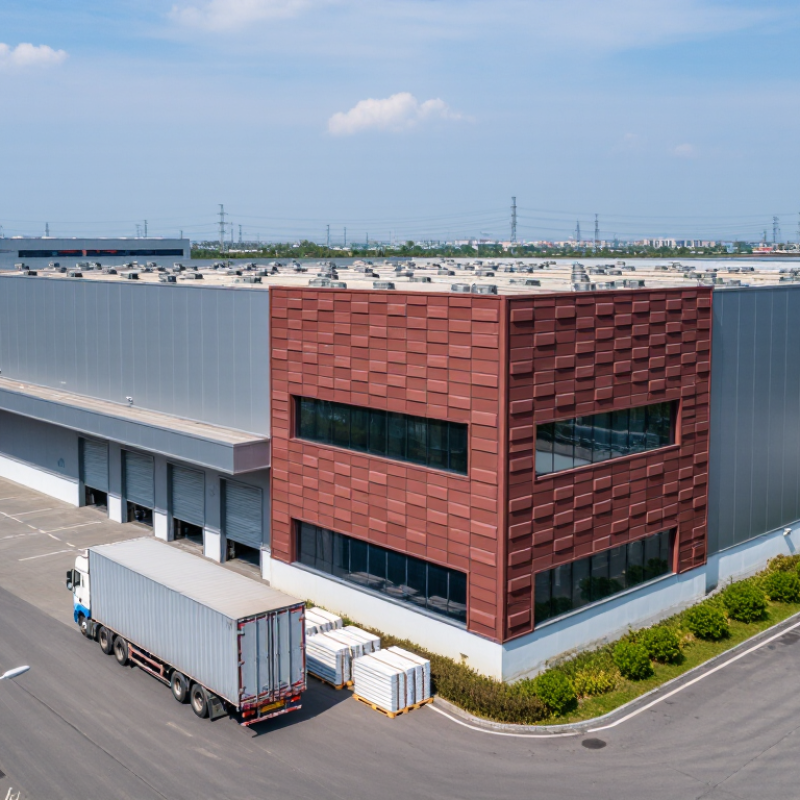
A brick PU sandwich panel is a factory-made building panel with three functional layers. Its core is rigid polyurethane foam, usually bonded between coated steel sheets. The outer surface carries a brick pattern, textured coating, or thin brick-like finish. It resembles masonry, but it is not a load-bearing brick wall.
The PU core provides low thermal conductivity and reduces heat transfer through the envelope. According to the 2023 UNEP Global Status Report for Buildings and Construction, buildings consume about 32% of global energy and produce approximately 34% of global carbon emissions. Better insulated panels can support lower operational energy demand, but results depend on joints, windows, ventilation, and installation quality. Poor sealing can create condensation behind the decorative face. That detail is often underestimated.
Panel performance should be checked through documented tests, not appearance alone. Relevant references may include EN 14509, ASTM C518, ISO 6946, and applicable fire-classification standards. Fire behavior, smoke production, core density, coating durability, and thermal aging require separate verification. A stronger-looking panel is not automatically safer. Specifications can also vary between production batches, which deserves honest attention.
Tips: Confirm the declared U-value, core thickness, fire test report, and water-tightness details. Inspect tongue-and-groove joints before installation. Keep cut edges protected from moisture. Request independent laboratory evidence where possible. Even a well-designed panel may fail when installers rush the flashing details.
A brick PU sandwich panel is a prefabricated building panel combining a brick or brick-pattern exterior surface with a polyurethane insulating core and an inner facing layer. The chart shows the estimated thermal transmittance, or U-value, for common panel thicknesses. The values are calculated using a typical polyurethane thermal conductivity of approximately 0.022 W/m·K and standard surface resistances; a lower U-value indicates better thermal insulation. Actual performance depends on panel construction, joints, facings, and installation quality.
Evaluating brick PU sandwich panel manufacturers starts with the panel, not the brochure. Request a physical sample with the actual brick texture, joint pattern, coating, and core thickness. Check the surface under angled light. Uneven embossing often appears before installation. Measure the panel length, width, and thickness with simple tools, then compare the results with the technical sheet.
Ask for verified data on thermal conductivity, foam density, fire performance, water absorption, bond strength, and dimensional tolerance. Reports should identify the tested product, not only a similar model. Laboratory documents matter. Also inspect production controls. A reliable manufacturer can explain how steel sheets are coated, how PU foam is injected, and how curing time is controlled. Visit the factory when possible. Look at stored coils, cutting accuracy, edge protection, and rejected panels. Clean storage is a useful sign.
Experience shows that appearance can hide weak joints. Request installation drawings and a small trial order before committing to a large volume. Review references for projects with similar climate, wall height, and transport distance. Clarify warranty limits, replacement procedures, packaging, and response times in writing. Cheap offers deserve slower checking. I once underestimated packaging quality; damaged corners caused more work than expected. That mistake still matters. A thoughtful evaluation also compares lead time, technical support, and consistency between sample and mass production.
China’s Top 10 Brick PU Sandwich Panel Manufacturers
China’s brick PU sandwich panel sector serves warehouses, cold rooms, workshops, and modular buildings. Its appeal is practical: a brick-textured exterior, factory-controlled insulation, and faster installation than masonry. The “top 10” should not mean sales volume alone. It should reflect tested thermal performance, panel consistency, fire documentation, production experience, and after-sales control.
The 2024 Global Status Report for Buildings and Construction, published by UNEP, states that buildings consumed about 32% of global energy in 2022. The sector also produced approximately 34% of energy-related emissions. That pressure makes insulation more than a visual feature. Polyurethane cores can reduce heat transfer when joints, edge details, and thickness are correctly specified. However, advertised U-values may not match site performance. Climate data, installation quality, ageing, and moisture deserve equal attention. This is where supplier experience becomes visible.
Buyers should request EN 14509 evidence, thermal conductivity, density records, tolerances, and fire classifications. ISO 6946 provides a recognized method for calculating thermal resistance in building components. Brick patterns should remain aligned across panel seams. Small errors look surprisingly obvious under daylight. Production capacity matters, but so does traceability from coil coating to finished core. A supplier may offer an attractive quotation yet provide weak technical support. That is a risk, not a saving. The ranking should remain reviewable, because climate, fire codes, and project requirements change.
| Rank | Anonymous Manufacturer Profile | Typical Production Region | Brick-Finish Panel Type | Core Material | Available Thickness | Standard Panel Width | Thermal Conductivity (W/m·K) |
Typical Core Density (kg/m³) |
Surface Coating Options | Common Standards | Typical Applications |
|---|---|---|---|---|---|---|---|---|---|---|---|
| 1 | Manufacturer Profile 01 | East China | Embossed brick-pattern insulated panel | Rigid polyurethane (PU) | 50–200 mm | 950–1,000 mm | Approximately 0.022 | 38–42 | Pre-painted steel with brick-texture embossing | GB/T 23932; GB 8624 classification subject to system testing | Industrial buildings, warehouses, commercial façades |
| 2 | Manufacturer Profile 02 | North China | Brick-look exterior wall sandwich panel | PU or PIR | 50–150 mm | 950–1,000 mm | Approximately 0.021–0.024 | 38–45 | Polyester or PVDF-coated galvanized steel | GB/T 23932; EN 14509 available for qualified systems | Cold-chain buildings, logistics centers, workshops |
| 3 | Manufacturer Profile 03 | Central China | Decorative brick-pattern roof and wall panel | Rigid PU foam | 40–200 mm | 900–1,000 mm | Approximately 0.022–0.025 | 36–42 | Colored steel sheet with UV-resistant topcoat | GB/T 23932; ISO 9001 production systems may apply | Prefabricated buildings, farm structures, retail façades |
| 4 | Manufacturer Profile 04 | South China | Hidden-fastener brick-finish wall panel | PIR-modified polyurethane | 50–180 mm | 1,000 mm | Approximately 0.020–0.023 | 40–45 | PE, SMP, HDP, or PVDF-coated steel | GB 8624; EN 14509 testing available by project requirement | Industrial façades, public buildings, clean production areas |
| 5 | Manufacturer Profile 05 | East China | Brick-textured architectural cladding panel | PU foam with steel facings | 50–150 mm | 950 mm | Approximately 0.022 | 38–42 | Embossed polyester-coated galvanized steel | GB/T 23932; ASTM C518 thermal testing may be specified | Residential extensions, offices, site buildings |
| 6 | Manufacturer Profile 06 | Northwest China | Heavy-duty brick-look exterior panel | High-density PU | 75–200 mm | 950–1,000 mm | Approximately 0.021–0.024 | 40–45 | Weather-resistant coated steel | GB/T 23932; project-specific wind-load verification | Large warehouses, distribution centers, agricultural buildings |
| 7 | Manufacturer Profile 07 | Southwest China | Lightweight brick-pattern insulated panel | PU sandwich core | 50–120 mm | 950 mm | Approximately 0.022–0.026 | 36–40 | PE-coated or printed steel surface | GB/T 23932; factory quality control to ISO 9001 principles | Temporary buildings, workshops, modular structures |
| 8 | Manufacturer Profile 08 | East China | Insulated brick-effect façade panel | Fire-retardant PU or PIR | 50–180 mm | 1,000 mm | Approximately 0.020–0.023 | 40–45 | PVDF, SMP, or HDP-coated steel | GB 8624; EN 14509 and ASTM E84 subject to tested assembly | Commercial buildings, food facilities, industrial façades |
| 9 | Manufacturer Profile 09 | North China | Brick-pattern panel with concealed joint system | Rigid PU foam | 50–200 mm | 950–1,000 mm | Approximately 0.022–0.025 | 38–42 | Brick-embossed pre-painted galvanized steel | GB/T 23932; EN 14509 design calculations where required | Cold rooms, manufacturing plants, logistics facilities |
| 10 | Manufacturer Profile 10 | Central China | Custom-color brick-finish sandwich panel | PU or PIR insulated core | 50–150 mm | 950 mm | Approximately 0.021–0.024 | 38–45 | Customized brick color with polyester, SMP, or PVDF coating | GB/T 23932; thermal and fire performance verified by product testing | Prefabricated houses, schools, offices, renovation projects |
| Technical values are representative industry ranges for PU/PIR brick-finish sandwich panels. Actual thermal performance, fire classification, structural capacity, coating life, and dimensions depend on the tested panel assembly, steel thickness, joint design, installation conditions, and applicable project standards. | |||||||||||
China’s top 10 brick PU sandwich panel manufacturers are best compared through products, process control, and production depth. Their brick-pattern panels typically combine coated steel skins with rigid polyurethane cores, creating a masonry appearance without heavy wall construction. Common options include 50–200 mm thicknesses, concealed joints, tongue-and-groove edges, and custom lengths. Some factories also produce roof panels, cold-room panels, and corner accessories. The visual finish matters. So does the seal.
Stronger plants use continuous foaming lines, automated profiling, and controlled lamination pressure. These systems help maintain core density, bond strength, and flatter surfaces. Technical specifications should state thermal conductivity, steel thickness, coating type, fire performance, and dimensional tolerance. Quality teams may sample panels from both ends and the middle of a production batch. They should inspect cut edges, joint fit, and foam voids. Small defects become expensive on site.
Production capability separates a catalog supplier from a dependable manufacturer. Look for stable raw-material storage, multiple forming lines, curing space, export packing, and traceable test records. Some facilities can support large orders, but capacity claims need evidence: line speed, monthly output, inspection reports, and realistic lead times. Certifications alone are not enough. Factory audits still matter. A weakness remains common: brick texture can hide uneven joints or coating variation. Buyers should request full-size samples and independent fire testing before approval.
China Top 10 Brick PU Sandwich Panel Manufacturers
How to Select the Right Chinese Manufacturer for Your Project
Choosing among China’s top brick PU sandwich panel manufacturers requires more than comparing prices. The UNEP 2023 Global Status Report states that buildings consumed about 34% of global energy in 2022 and produced 37% of energy-related emissions. Therefore, check the panel’s thermal conductivity, density, joint design, and declared U-value. Ask for recent laboratory reports, not only catalog figures. A reliable factory should provide production records, coating specifications, core thickness data, and testing against relevant Chinese or international standards.
Visit the production line if possible. Watch the foaming process, steel-sheet bonding, edge cutting, and packaging. Small details matter. Uneven foam can create cold bridges. Poor wrapping may damage panels before installation. Compare the manufacturer’s stated tolerances with inspection records from completed projects. Request samples before signing a large order, and confirm whether the quoted price includes accessories, loading, export packaging, and technical support. I have found that the cheapest quotation often hides installation risks.
Tips: Build a scoring sheet with thermal performance, fire-test evidence, monthly capacity, quality control, delivery history, and warranty response. Request at least three references in a similar climate. Check factory ownership carefully. A polished showroom is useful, but it is not proof of stable production. Also, clarify whether “brick” describes the printed finish or a genuine textured surface. That detail can change maintenance expectations.
It is a factory-made panel with three functional layers. A rigid polyurethane foam core sits between coated steel sheets. The exterior carries a brick pattern or textured finish. It resembles masonry, but it is not a load-bearing brick wall.
The foam core slows heat transfer through the building envelope. This may reduce heating and cooling demand. Results depend on windows, ventilation, joints, and installation quality. Insulation alone cannot solve every energy problem.
Yes. Poorly sealed joints can allow water or humid air behind the decorative surface. Condensation may then develop inside the panel system. Flashing details deserve careful inspection. Small gaps matter.
Ask for the declared thermal value and core thickness. Request fire-test results, water-tightness details, and dimensional tolerances. Check foam density, bond strength, and water absorption. The report should identify the exact product tested.
Examine the brick texture under angled light. Uneven embossing may become obvious from this view. Measure the length, width, and thickness with simple tools. Compare every result with the technical sheet. Do not trust appearance alone.
Ask how steel sheets are coated, foam is injected, and curing is controlled. Inspect stored coils, cutting accuracy, edge protection, and rejected panels. Clean, dry storage is a useful sign. It is not proof of perfection.
A small trial can reveal weak joints, damaged corners, or inconsistent finishes. Compare the sample with panels from mass production. Check packaging after transport. I once underestimated packaging quality. That mistake was expensive in time.
Clarify delivery times, packaging, warranty limits, and replacement procedures. Include response times for technical support. Record the approved texture, thickness, coating, and joint pattern. Cheap offers deserve slower checking.
This article provides a practical overview of the Brick Pu Sandwich Panel, including its structure, insulation performance, durability, appearance, and common applications in industrial, commercial, and prefabricated buildings. It explains how the panel combines a brick-like exterior finish with a polyurethane core, offering an efficient balance of thermal insulation, weather resistance, installation speed, and visual appeal. Readers will also learn which technical specifications and quality indicators should be reviewed when comparing manufacturers.
The article presents a structured approach to evaluating China-based suppliers, focusing on production capacity, raw material control, panel consistency, customization options, testing procedures, delivery reliability, technical support, and after-sales service. It also discusses key manufacturing technologies and product capabilities before outlining how to select the most suitable supplier for a specific project. By comparing performance requirements, budget, project scale, certification needs, and communication efficiency, buyers can make a well-informed decision and reduce potential construction risks.